Helping tommorow
Can You Perform Umrah on Behalf of a Deceased Person?
 AlChams Travel
Just like Hajj, Umrah is an obligation that must be performed at least once in a lifetime by anyone who has the physical and financial ability to do so. Translated as “holy visit,” Umrah is a religious act of worship that is also performed in Makkah, somewhat similar to Hajj. However, unlike Hajj, which takes place according to a specific calendar, Umrah can be performed throughout the year. Umrah, also known as the “Minor Pilgrimage,” is therefore a pilgrimage to the Holy Lands that can be undertaken at any time of the year, unlike Hajj, which is also known as the “Major Pilgrimage.”
Umrah has many virtues that are sometimes not given the consideration they deserve. These virtues are even more significant when Umrah is performed during the sacred month of Ramadan. Makkah and Madinah are two extraordinary treasures, and every year Muslims travel there with heartfelt supplications to visit these sacred places. Some also travel there to perform Umrah on behalf of a deceased person. However, many of us often ask the following question: Can Umrah be performed on behalf of someone who has died?
Can Umrah Be Performed on Behalf of a Deceased Person?
The following authentic Hadiths are particularly relevant regarding performing Umrah on behalf of a deceased person:
- Al-Bukhari (11/584, Kitab al-Ayman wa an-Nudhur) reported:
Ibn ‘Abbas narrated: “A woman from Juhaynah came to the Prophet ﷺ and said: ‘O Messenger of Allah, my mother had made a vow to perform the major pilgrimage (Hajj), but she died before fulfilling it. May I perform it on her behalf?’
The Prophet ﷺ replied: ‘Perform the pilgrimage on her behalf. Do you think that if your mother had a debt to someone, you would pay it on her behalf? The debt owed to Allah is more deserving of being fulfilled.’”
- Also narrated in Al-Bukhari:
Ibn ‘Abbas narrated: “A man came to the Messenger of Allah ﷺ regarding a man named Shubrumah. The Messenger of Allah ﷺ asked him: ‘Who is Shubrumah?’ The man replied: ‘He is one of my brothers.’ The Prophet ﷺ then asked: ‘Have you performed Hajj for yourself?’ The man replied: ‘No.’ He said: ‘Perform Hajj for yourself first, then perform it on behalf of Shubrumah.’”
- The Prophet ﷺ said:
“When the son of Adam dies, his deeds come to an end except for three: ongoing charity, beneficial knowledge, or a righteous child who supplicates for him.”
- Performing Hajj on behalf of one’s deceased father or mother is also considered an act of righteousness and kindness, as Allah mentions in the following verse:
“And We have enjoined upon man, to his parents, good treatment. His mother carried him, [increasing her] in weakness upon weakness, and his weaning is in two years. Be grateful to Me and to your parents; to Me is the final destination.” (Qur’an 31:14)
Many other Hadiths and Qur’anic verses related to this subject demonstrate that deceased people may benefit from the charity, supplications, Hajj, and Umrah performed by the living […].
So, How Do You Perform Umrah on Behalf of a Deceased Person?
Based on the Hadiths mentioned above, it is permissible to perform Umrah on behalf of a deceased person, and it is indeed considered a great expression of piety and kindness toward them. However, the main condition required for you to perform Umrah on behalf of someone who has died is that you must have already performed Umrah on your own behalf.
Furthermore, if the deceased person did not possess wealth beyond what was necessary to provide for themselves and their family, then they were not obligated to perform the pilgrimage. Therefore, it is not necessary to perform it on their behalf, unless someone chooses to do so voluntarily.
The people most suited to performing Umrah on behalf of deceased relatives—as is most often the case—are their own children. This is part of the kindness and goodness that children owe to their parents, even after their death. After completing their own Umrah, performing Umrah on behalf of their deceased father or mother should be an aspiration for every child seeking the pleasure of Allah through honoring their parents.
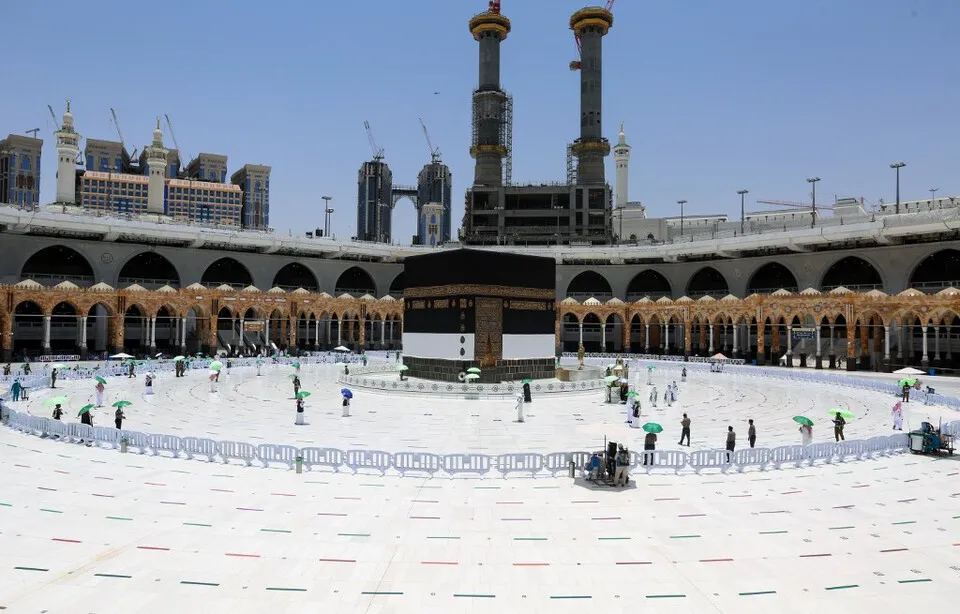
When performing Umrah on behalf of a deceased person, absolutely nothing changes in terms of the procedure or rituals compared with performing Umrah for oneself. The rites, locations, and timings are exactly the same. The word Umrah etymologically means “visit,” while its religious meaning refers to “visiting the Sacred House of Allah” while exclusively being in a state of consecration (Ihram), along with all the acts of worship this entails, including the ritual circumambulation around the Kaaba and walking between the hills of as-Safa and al-Marwa.
The pilgrim performing Umrah on behalf of a deceased person must therefore enter the state of Ihram at the Miqat. This is followed by the Tawaf of Umrah. The pilgrim then performs Sa’i between as-Safa and al-Marwa before ending the state of Ihram by shaving or shortening the hair.
It should be noted that it is not permissible for a person to perform Umrah on behalf of another person—whether deceased or living—who neglected the fundamental obligations of Islam, deliberately neglected the obligation of pilgrimage, and lacked a firm commitment to fulfilling their religious duties. Likewise, it is not permissible to perform Umrah or Hajj on behalf of a living person who is physically and financially capable of fulfilling these obligations but has deliberately neglected the prescribed duty of Hajj or Umrah.